Acrylic Mediums
I love acrylic mediums because they make acrylic paints so versatile! In this article I'll introduce you to acrylic paint mediums - liquids or gels that you mix into the paint - and explain how they can help you create different effects and finishes by making the paint thicker, thinner, glossy, matte, textured, slow-drying and more.
Acrylic mediums are another reason why I prefer acrylics over oils. There are mediums for oil paints, but they're generally smelly, toxic, and you have to be careful about how you use them or you risk the paint cracking. There are no such worries with acrylic mediums because they are made with the same emulsion base as acrylic paint, so they dry at the same rate. But you do need to be a bit careful with additives.
Mediums vs. Additives
I've included additives in this page because they serve a similar function to acrylic paint mediums. The difference is that additives don't contain acrylic binders (like mediums do) so you must follow the label and use them in correct proportions. Most mediums can be added to the paint in any amount until you've the achieved the desired effect, but it's possible for additives to weaken the color and adhesion of the paint when overused.
I've provided links below to the relevant products so that you can easily find them on Amazon. As as Amazon affiliate I earn on qualifying purchases (at no extra cost to you). Your purchase helps support this site.
Now lets take a look at the types of acrylic mediums and additives you can use with acrylic paint: Gloss Medium, Matte Medium, Glazing Medium, Gel Medium, Modeling Paste, Texture Gels, Retarding Medium, and Flow Improver.
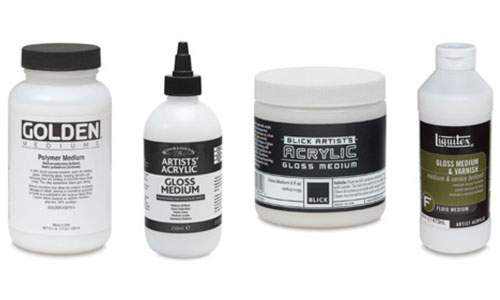
Gloss Medium
Gloss mediums are handy if you want to enhance the natural sheen and luminosity of acrylic paint. Gloss medium will also make paint thinner and more transparent, which is useful if you want to paint thin but brilliant glazes.
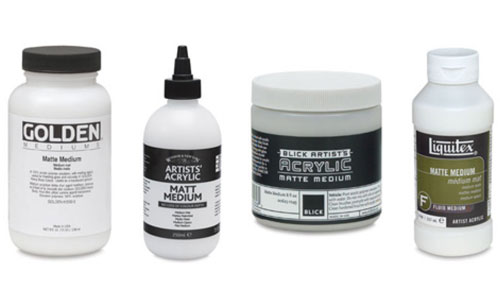
Matte Medium
Because acrylic paint is already naturally glossy, matte medium is handy when a more subtle, non-reflective finish is needed. You can also mix gloss and matte mediums together in equal parts to achieve a kind of semi-gloss.
Glazing Medium
Like gloss medium, glazing medium will make acrylic paint more transparent and facilitate subtle glazing techniques.
Glazing medium is also sometimes called glazing liquid, depending on the brand. Golden offers glazing liquid in satin and gloss sheens. Make sure you don't buy glazing medium that contains oils because it's not compatible with acrylics.

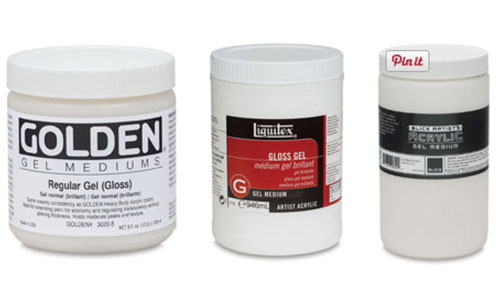
Gel Medium
Gel medium is a white, paste-like gel that will thicken your paint so that it retains brushstrokes, which is great for impasto techniques. Gel medium also enhances the adhesive properties of the paint, which makes it suitable for collage work.
Gel mediums are available in different types, like gloss & matte, and also different textures, which I'll discuss below.
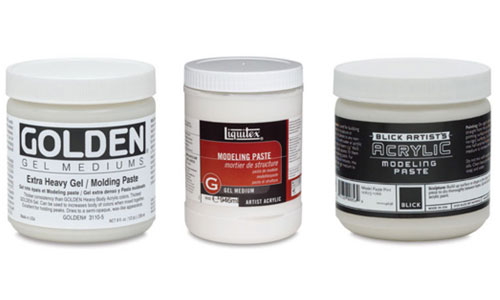
Modeling Paste
Modeling paste, sometimes called molding paste, is like gel medium but thicker and harder. You can literally make your painting three-dimensional by building up a relief that can then be sculpted, sanded or carved once it's dry. Modeling paste is also great for collage because you can embed all kinds of objects in the surface.
Texture Gels
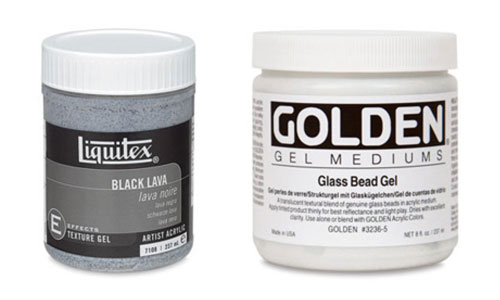
Texture gels imitate certain textures, such as sand, ceramic stucco and glass beads. They're fun to experiment with and can really enhance certain artworks. You can also make your own texture by mixing in some sand, sawdust or whatever you want. To learn more about how to use them you can vist my Acrylic Texture Mediums page.
Retarding Medium
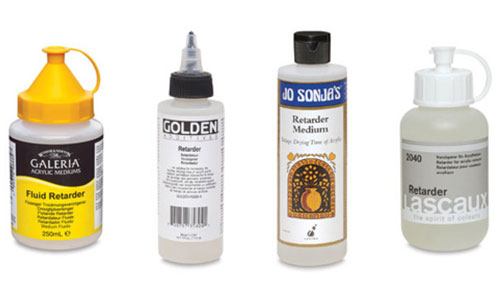
Retarding medium (also called retarders) slows down the drying time of acrylic paint so that it behaves more like oil paint. This allows you to mix colors on the support and create smooth blending effects. Most retarding mediums are actually additives (lacking acrylic binders) so follow the directions and make sure you don't use too much.
If you use blending effects a lot, it might be easier to buy Open Acrylics which are formulated to have a longer drying time straight out of the jar.
Flow Improver
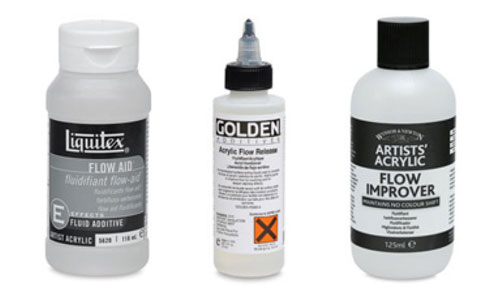
Flow improver, sometimes called "wetting agent" or "flow aid" (depending on the brand), is another additive you must use sparingly. It thins acrylic paint for use with wash techniques and painting over large areas. Acrylic paints are water-based, so you can thin them with water which breaks down the acrylic binder and makes the paint behave like watercolors. Flow improver works by breaking the surface tension of the water inside the paint which thins the paint without reducing color strength or compromising the finish.
A Few Parting Tips
Always mix in the medium after you've mixed the colors together.
Don't use oil mediums with acrylics because they aren't compatible.
Some acrylic paint medium products claim that they can also be used to varnish your paintings. I recommend you use a removable varnish as a final top coat instead of a medium.
When it comes to acrylic paint mediums, there isn't too much difference between brands (unlike paints) because most mediums and additives are made with the same chemical formula.
Level-up Your Painting Skills!
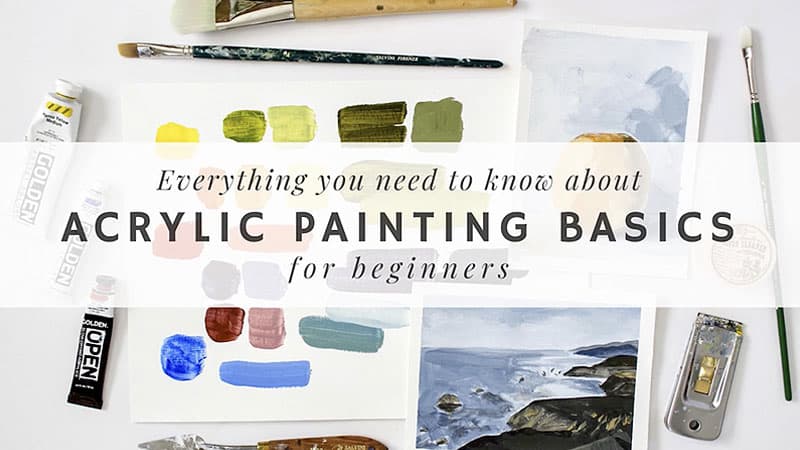
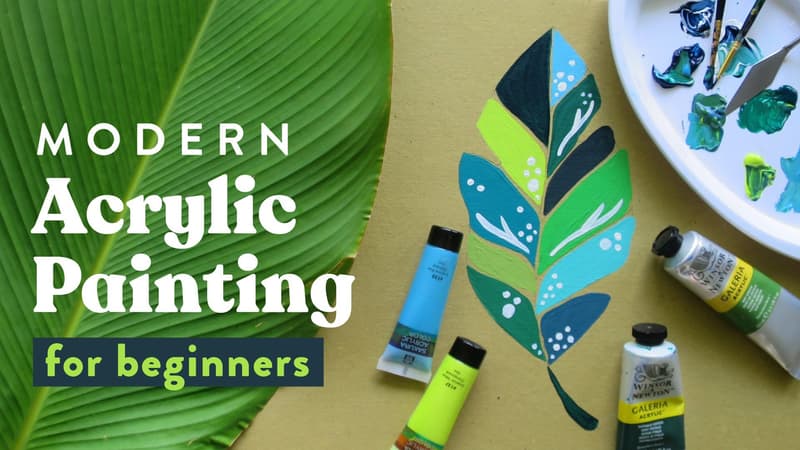
Learn more about the basics of acrylic painting with these video courses on Skillshare. Get started right away with their 14-day free trial or use the code ARTISFUN30 to get 30% off annual membership! As an affiliate to Skillshare, we get a small commission that helps support this site.