
Art Supplies: Canvas
When buying art supplies, canvas is usually at the top of the list, right next to paints and brushes. For basic information about canvases and all the different types available for artists, hop on over to this Handy Guide to Art Supplies: Canvas.
On this page I will address two questions that artists face when working on canvas:
Common Questions about Artist Canvas
What can I do with the sides of the canvas?
While most of your concern will be about what's on the front of the canvas, for presentation purposes it's usually nice to keep the sides of the canvas neat and tidy. If you are planning to frame your painting, no problem - be as messy as you want, because the frame will cover the sides.
However, a lot of contemporary art looks better unframed. In fact, the thicker canvases (wider than 3/4") would be hard to frame, and are better left hanging directly on the wall as is.
In the past, canvases typically had unsightly staples along the edges. These days, the majority of canvases are stapled around the back. This hides the staples from view, and gives the canvas a more clean, sophisticated look. Some of the edges are really wide (up to 3.5"), which means you can get really creative with the sides by using the edges to enhance what's on the front of the canvas.
So what do you do with the sides to make them presentable and/or artistic? You basically have three options:
- You can paint the sides a solid color, such as black or some other color that works well with the other colors of your painting.
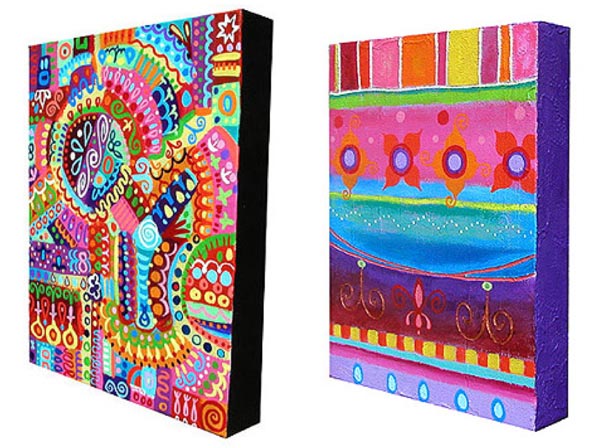
- You can paint the sides of the canvas to match the front, basically continuing or wrapping the painting around all four sides of the canvas.

- You can paint the sides with designs or images that complement, but do not match directly, the image of your painting.

Your decision for the sides of your canvas will depend on the style of art you are creating and what look you want to achieve. There are so many options to choose from, so be creative and have fun!
How can I fix a warped canvas?

Sometimes you may unwrap a canvas from its plastic packaging only to discover that it is slightly warped in a most unsightly way. Or you may notice that it has a dent near the corner. No fear, these problems are normally easily fixable!
To fix a warped canvas, all you need to do is spray the back of the canvas with water. After it dries, the canvas should be tightened up again. I don't know the science behind it - all I know is that it works! I've done this loads of times with warped canvases and it always does the trick.
If you have a dent in the canvas, you can also try the water trick. Depending on how deep the dent is, it may or may not fully solve the problem, but in most cases it will help a great deal.
If you have a warp or dent that is very near one of the corners, don't be afraid to spray water on the canvas underneath the stretcher bars. It will all dry out and be fine.
If spraying water doesn't do the trick, there is a product you can use called Tight'N'Up Liquid Canvas Re-Tensioner (this links to Blick Art Materials, and if you make a purchase we get a small commission that helps support this site). It solves the problem of warped canvas instantly. Simply spray it on the back of the canvas the same way you would spray water, as described above.

Learn about other surfaces you can paint on with acrylics, including wood, paper, metal, and more.
Find out what acrylic painting supplies you should get if you want to get started with acrylic paintings, including paint, paintbrushes, and accessories.
Click here to return to the main Acrylics Table of Contents page, where you will find tons of useful info about working with acrylics!